
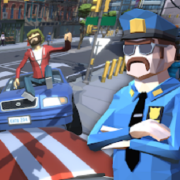
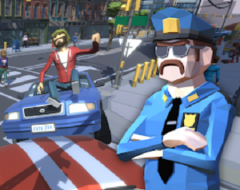



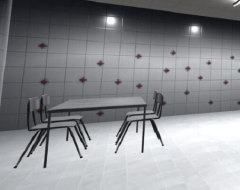
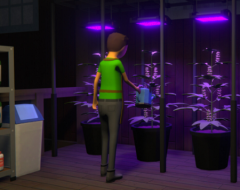


Sandbox City is an open-ended game focused on free interaction within an urban environment. The player is placed inside a large city map with access to vehicles, characters, and interactive objects from the start. There is no fixed storyline or required objective. Instead, the game encourages experimentation through unrestricted movement and system-based interactions. Progress is defined by player choice rather than completion of missions or levels.
City layout and interaction space
The city in Sandbox City is designed as a functional playground rather than a realistic simulation. Streets, buildings, and public areas serve as spaces where systems can interact. Traffic follows basic rules, pedestrians react to player actions, and environmental elements respond to force and movement. The layout supports exploration without guiding the player toward specific locations. This allows repeated sessions to unfold differently depending on how the player chooses to engage with the environment.
There are no narrative prompts or character arcs. The absence of structured goals shifts attention to cause-and-effect relationships inside the city. Players may choose to observe how systems behave on their own or actively interfere with them. The game does not reward efficiency or completion, which removes pressure and allows extended experimentation.
Systems and gameplay mechanics
Sandbox City relies on a set of simple mechanics that combine to create varied outcomes. Actions are not scored, and there are no failure states. Instead, the game responds consistently to player input, allowing patterns to emerge naturally. Objects and characters follow predictable rules, which makes learning the system more important than mastering controls.
Key interactive elements include:
· free movement across the city map
· use of vehicles and environmental objects
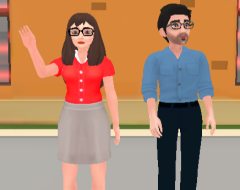
· interaction with non-player characters
· physics-based reactions
· reset and replay at any time
Player freedom and pacing
The pacing of Sandbox City is entirely player-controlled. Sessions can be short or extended without affecting future play. There are no checkpoints or progression locks, so players can switch activities freely. This structure supports exploration without commitment and allows players to test ideas repeatedly. Over time, familiarity with the systems leads to more deliberate experimentation rather than random action.
Sandbox City functions as a toolset rather than a challenge. By removing objectives and progression systems, it focuses on interaction within a stable environment. The game provides a controlled space where outcomes are shaped by player input alone. Its design emphasizes freedom, repetition, and system understanding, making each session independent while remaining consistent in how the city responds.
