
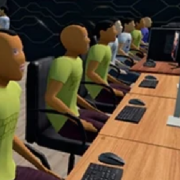

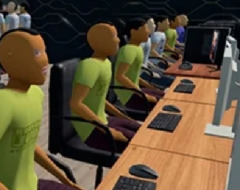










Internet and Gaming Cafe Simulator is a management simulation game that places the player in control of a small public computer café. The main goal is to build, organize, and maintain a space where customers can access the internet and play games. The game focuses on routine management tasks such as equipment setup, customer satisfaction, and financial balance. There is no fixed storyline, and progress depends on how efficiently the player handles daily operations.
Cafe setup and environment
The game begins with a basic location that includes limited furniture and a small number of computers. The player is responsible for arranging the interior, placing equipment, and deciding how the space should function. Every object has a practical purpose, and poor placement can affect customer flow. The environment evolves as the café expands, but changes remain grounded in management logic rather than visual transformation. Attention is directed toward usability instead of decoration.
As customers enter the café, they react to available services and pricing decisions. Some prefer gaming setups, while others only need basic internet access. The player must balance different needs without direct instructions. This creates a system where observation becomes important. Small adjustments, such as upgrading hardware or reorganizing seating, can influence overall performance.
Core management systems
Internet and Gaming Cafe Simulator relies on interconnected systems that operate continuously. Financial stability depends on keeping expenses under control while attracting enough customers to generate income. Equipment can wear down, requiring maintenance or replacement. The game does not pause these systems, which encourages planning rather than reactive decisions.
Key management elements include:
· purchasing and upgrading computers
· setting service prices
· managing customer satisfaction
· maintaining equipment condition
· expanding the café space
Progression and decision-making
As income increases, the player gains access to additional features and larger spaces. Expansion introduces more complexity, including higher costs and increased customer expectations. There is no single correct strategy, and mistakes are part of the learning process. The game allows recovery from poor decisions, but repeated inefficiency can slow progress.
The decision-making process remains grounded in routine evaluation. The player must regularly review finances, customer behavior, and equipment status. There are no sudden events that force quick reactions, which keeps the pacing steady. This structure supports extended play sessions without pressure.
