











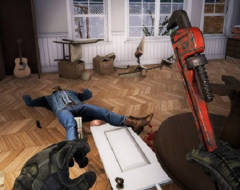

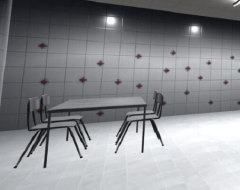



Grand Escape: Prison places the player inside a closed correctional facility where progress depends on planning and observation. The player controls an inmate whose objective is to leave the prison without triggering alarms or direct confrontation. The game is structured around short playable segments that introduce constraints such as limited movement, guarded zones, and restricted resources. Instead of relying on speed, success is achieved by understanding routines and choosing safe paths through controlled areas.
Environment and structure
The prison setting is divided into multiple sections, including cells, corridors, service rooms, and outdoor areas. Each section introduces new rules that affect how the player can move or interact with objects. Guards follow predictable patterns, and security systems operate on fixed schedules. The layout encourages repeated attempts, as mistakes often send the player back to earlier checkpoints. Over time, the player becomes familiar with the environment and learns how small changes in timing can affect outcomes.
Progression is tied to unlocking access points rather than character upgrades. Keys, tools, and hidden passages act as the main form of advancement. The game does not explain every mechanic directly, which encourages experimentation. Information is gathered through observation, making each failed attempt part of the learning process rather than a simple setback.
Gameplay mechanics and interaction
The core gameplay loop focuses on navigating space while avoiding detection. Interaction options are limited, which keeps attention on positioning and timing. Each level builds on previous mechanics without changing the overall control scheme.
Main gameplay elements include:
· movement through guarded areas
· observation of patrol routes
· interaction with basic objects
· use of timing to bypass obstacles
· gradual unlocking of new sections
Challenge and pacing
As the game advances, levels introduce additional layers of complexity. Guard patterns become less forgiving, and safe zones are reduced. New obstacles such as cameras or locked barriers require more precise planning. Despite this, the pace remains steady, with each section designed to be completed in short sessions. This structure supports replay, as players often return to earlier areas with improved understanding.
Grand Escape: Prison emphasizes process over action. By limiting player abilities and focusing on environmental rules, the game creates a system where attention and consistency determine progress. The experience centers on navigating restrictions and adapting to fixed systems, making each successful escape route the result of careful analysis rather than reaction.
