
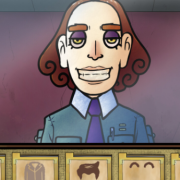

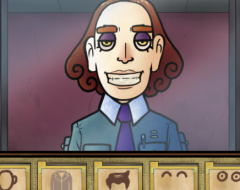










That’s Not My Neighbor is a short-form simulation game built around identity verification and routine-based decision making. The player works as a building gatekeeper in an apartment complex and must decide who is allowed to enter. Each visitor claims to be a resident, but not all information can be trusted. The game is played from a fixed workstation, where documents, faces, and verbal statements must be checked against records. Progress depends on accuracy rather than speed.
Setting and basic premise
The entire game takes place at the entrance of a residential building. Residents arrive one by one and present identification, while the player compares their appearance and information with internal files. Some visitors show minor discrepancies, while others attempt to bypass checks entirely. The setting does not change visually, but tension develops through repetition and variation. The lack of movement shifts focus toward observation and comparison instead of navigation or reaction.
As shifts continue, the number of cases increases and the differences between valid and invalid entries become less obvious. The game introduces altered documents, inconsistent names, and visual mismatches that require close attention. Players must decide whether to deny entry, allow access, or request additional verification. Errors have immediate consequences, reinforcing the importance of consistent evaluation rather than intuition.
Mechanics and interaction
The gameplay loop is simple but strict. Each action is limited to checking information and making a final decision. There are no hints or corrective prompts during active play, which places responsibility entirely on the player.
Core mechanics include:
· checking identification documents
· comparing facial features with records
· verifying apartment numbers and names
· approving or denying building access
· tracking mistakes across shifts
Escalation and challenge
As the game progresses, new variables are added without changing the interface. Some visitors arrive with partial data, while others present valid documents paired with incorrect details. The player must rely on memory, consistency, and process rather than pattern recognition alone. Mistakes accumulate and can lead to shift termination, reinforcing careful review over quick judgment.
That’s Not My Neighbor focuses on repetition, attention, and rule enforcement. By limiting interaction to verification tasks, the game explores how routine systems fail under pressure. The experience highlights how small errors can compound over time when responsibility is repeated without clear resolution.
