
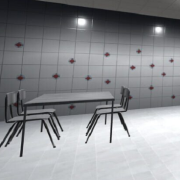

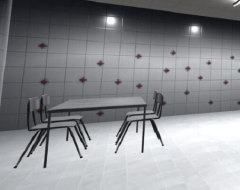



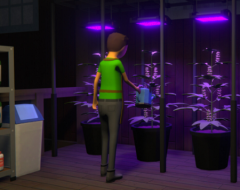







Button Prison is a puzzle-based game built around simple interaction and repeated decision-making inside a closed prison environment. The player is placed in a single room filled with buttons, switches, and basic indicators. There are no direct explanations of what each button does, and the goal is discovered through trial, observation, and memory. Progress is achieved by understanding how the system reacts to input rather than by following instructions or completing scripted objectives.
Environment and basic concept
The setting of Button Prison is minimal and intentionally limited. The player remains confined within the same space for most of the experience, which keeps attention focused on interaction rather than movement. Buttons are the primary form of control, and each one triggers a response that may not be immediately visible. Some actions affect the environment directly, while others alter hidden conditions that influence future outcomes. This structure encourages players to pay attention to patterns and results over time.
There is no narrative delivered through dialogue or cutscenes. Instead, the game relies on system feedback to communicate progress or failure. Lights, sounds, or changes in available options signal whether a sequence is moving closer to resolution. Because nothing is labeled, players must build their own understanding of cause and effect through repeated attempts.
Interaction and logic systems
Gameplay in Button Prison is centered on experimentation. Pressing buttons in different orders produces different results, and mistakes are expected. The game does not punish failure heavily, allowing players to reset and try again. This design supports learning through repetition rather than precision.
Key interaction elements include:
· pressing buttons in varied sequences
· observing visual or audio feedback
· tracking changes in available controls
· identifying safe and unsafe actions
· resetting progress to test new ideas
Progression and challenge
As the player continues, the system introduces more complexity without expanding the physical space. New buttons become active, and previous assumptions may stop working. This forces players to adapt rather than rely on memorized solutions. Progression is mental rather than mechanical, as success depends on understanding how rules interact rather than improving speed or accuracy.
The challenge increases through limitation. The game may restrict how many actions can be taken before a reset, or hide information that was previously visible. These constraints require planning and restraint, turning each decision into a calculated step rather than a random choice.
Button Prison does not provide a clear endpoint early on. Completion comes from recognizing a stable solution within the system. The lack of guidance makes each discovery feel earned through logic rather than chance.
